



Quick summary
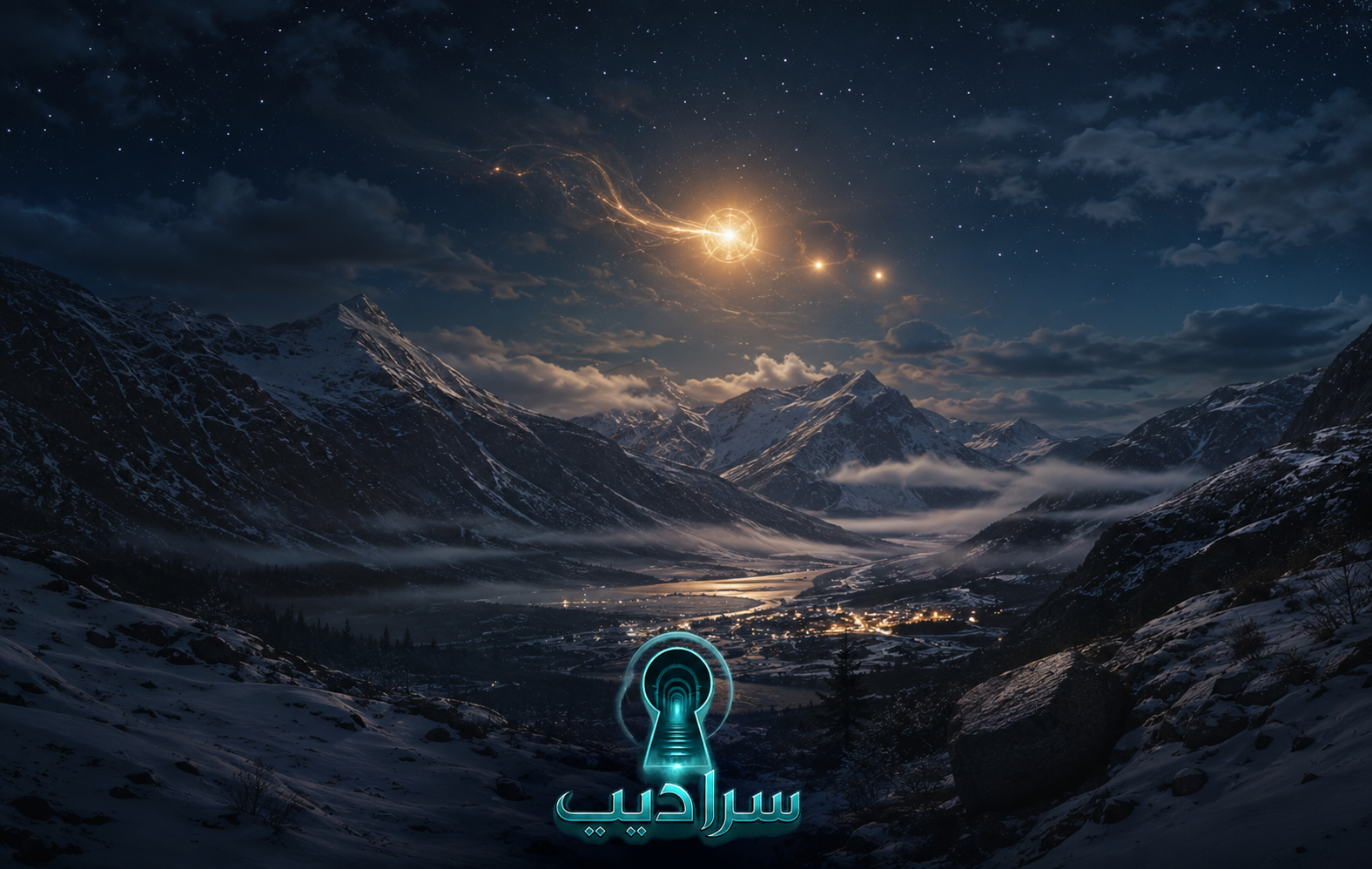
- In a serene Norwegian valley, strange glowing orbs hover and dart through the sky, defying conventional explanation.
- Known as the Hessdalen Lights, these phenomena remain one of science's most enduring enigmas.
NavigationIn this article
In a serene Norwegian valley cradled by mountains and snow, strange lights occasionally appear—unlike the beams of aircraft or the glow of car headlights. Luminous spheres hover in the sky, stopping abruptly, moving at varying speeds, sometimes splitting into smaller points, then vanishing as if they never existed.
This phenomenon is known as the Hessdalen Lights, named after the Hessdalen Valley in central Norway. Despite decades of study, scientists remain divided over their true origin.
Is it a rare atmospheric phenomenon yet to be understood by science? Or the result of strange interactions between rocks and air? Or is there an even more bizarre explanation behind it?
The Beginning of the Story in Hessdalen Valley
The lights were not entirely unknown to the local residents; generations had passed down stories of luminous objects appearing over the valley for more than a century. However, the phenomenon became a global mystery in the early 1980s when the number of sightings suddenly surged.
Between 1981 and 1985, valley residents reported seeing the lights numerous times a week, with reports reaching a peak of about twenty sightings per week. It was no longer just a story told by a single person, but a phenomenon observed by a large number of residents from various locations.
Some lights remained visible for minutes, while others lasted longer. They sometimes moved slowly over the mountains, then suddenly accelerated or changed direction. In other cases, they remained stationary before fading and disappearing.
From Resident Testimonies to Measuring Instruments
As sightings increased, Project Hessdalen was established in 1983 to study the phenomenon using scientific methods rather than relying solely on witness accounts.
In the winter of 1984, the first extensive field campaign was conducted in the valley. Researchers utilized cameras, radar, and instruments to measure magnetic fields, radiation, and seismic activity, along with equipment for light spectrum analysis.
During the research period, the team recorded 53 light sightings, and some instruments managed to detect the phenomenon simultaneously with visual observations. This was significant because it proved that some of the lights were not merely optical illusions or individual errors in distance estimation.
In 1998, an automated monitoring station known as the "Blue Box" was installed. The station includes cameras and sensors that monitor the valley's sky, recording unusual objects and lights. Monitoring continues to this day, although the number of sightings is lower than it was in the 1980s.
What Do the Hessdalen Lights Look Like?
The phenomenon does not manifest in a single, consistent form, which is one of the reasons why explaining it is so difficult.
Witnesses often describe a white, yellow, or orange light taking the shape of a sphere or a luminous mass. Smaller red or green dots may appear with it. Some lights last only seconds, while others remain visible for minutes or hours.
Reports have also recorded lights splitting into smaller spheres, emitting flashes, or merging back together after separating. Studies indicate that the estimated sizes of the phenomenon vary greatly, from relatively small objects to luminous masses with diameters reaching tens of meters in some estimates.
However, estimating size and speed from a distance is no easy feat. A nearby light may appear small when it is actually a larger object far away, and the nature of the valley, the darkness, and the weather can all affect a viewer's perception.
Theory One: Plasma Balls
One of the most prominent scientific hypotheses suggests that the Hessdalen Lights may be clusters of plasma—gases that have become ionized and acquired electrical charges.
According to this idea, dust in the air can interact with charged particles, forming a luminous mass capable of maintaining its shape and moving for a certain period. Some researchers have suggested that radon gas leaking from rocks may help ionize the air and dust, leading to the appearance of what is known as "dusty plasma."
This theory can explain some characteristics of the lights, such as their spherical shape, movement, appearance in different colors, and occasional splitting into smaller groups. However, it does not explain all sightings and still requires more precise field measurements to be proven.
Theory Two: A Natural Underground Battery
The Hessdalen Valley contains various types of minerals, including iron, zinc, copper, and sulfides. Consequently, a hypothesis emerged suggesting that the valley might function like a massive natural battery.
The theory posits that groundwater transports ions between mineral-rich areas, creating an electrical potential difference and currents that can reach the Earth's surface. When this energy interacts with the air, it may lead to ionization and the appearance of luminous masses.
Recent geological surveys have supported the existence of electrically conductive zones beneath the valley floor associated with mineral deposits. However, the presence of these zones alone does not prove they are the direct source of the lights; rather, it suggests that the local geology may be a significant piece of the puzzle.
Theory Three: Unknown Chemical Combustion
Some light analyses have shown that the phenomenon may resemble a combustion process or a chemical reaction that releases energy and light in the lower atmosphere.
The problem is that scientists have not yet identified an energy source capable of keeping some of these lights stable for long periods. Ordinary combustion requires fuel, whereas some Hessdalen lights appear to move and maintain their brightness without an obvious source feeding them.
Therefore, some studies have concluded that the phenomenon may involve a combustion process, but one driven by an energy source that remains unknown.
Could They Just Be Planes or Cars?
Some sightings may be the result of common misidentifications. Distant car headlights, airplanes, planets, meteors, and satellites can look strange in the valley, especially on dark nights or in the presence of fog and low clouds.
Therefore, researchers attempt to rule out known sources before classifying any recording as an unexplained phenomenon. However, some cases have been observed both visually and by measuring instruments, showing characteristics that were not easily linked to a conventional source.
Perhaps not all Hessdalen lights share a single cause. Some cases might be aircraft or ground lights, while others result from rare atmospheric or geological phenomena. This possibility makes reaching a comprehensive explanation even more complex.
Do Extraterrestrial Objects Have a Connection?
The name Hessdalen was quickly linked to Unidentified Flying Objects (UFOs). Some witnesses spoke of lights moving in unusual ways or objects that appeared solid behind the light.
However, there is currently no reliable scientific evidence proving that the phenomenon is caused by spacecraft or extraterrestrial activity. The existence of an unknown light does not automatically mean it comes from space; it simply means that the available data was insufficient to determine its source.
The extraterrestrial visitor hypothesis remains the most exciting in popular culture, but it is not the strongest explanation from a scientific perspective.
Why Has the Mystery Remained Unsolved?
The fundamental problem is that the phenomenon is irregular. Days or weeks may pass without any unusual light appearing, and then a sudden sighting occurs in a location not sufficiently covered by instruments.
Furthermore, the lights do not always behave in the same manner. Their color, size, speed, and duration vary, raising the possibility that what are called the "Hessdalen Lights" are not a single phenomenon, but a group of phenomena that are similar in appearance.
Researchers have stated that proposed models can explain some characteristics, but there is currently no single model that explains all recorded sightings, especially cases with conflicting behaviors and properties.
A True Mystery Between Science and the Unknown
What distinguishes the Hessdalen Lights from many other mysterious stories is that they do not rely solely on scattered testimonies. They have been photographed, detected by scientific instruments, and subjected to years of studies and field campaigns.
Despite this, researchers have not reached a final answer.
The lights may be the result of a complex interaction between minerals, groundwater, electrical fields, and the atmosphere. They may be a rare form of natural plasma that science is only beginning to understand. Perhaps the valley brings together more than one different phenomenon under a single name.
Until more precise measurements emerge, the Hessdalen Lights will remain one of the strangest phenomena standing on the border between what science can explain and what still remains hidden in the darkness.
Writer: Saradeeeb Team
Have a thought or question about this article?
Continue the conversation in the community and share your ideas with readers and writers.

Comments 0
Share your thoughts respectfully. Abusive or disruptive comments may be hidden.